RESTORATION, PRESERVATION & ARCHIVING
MENU
RESTORATION FAQ
Here are some of our most common questions about photo restoration process and services, such as:
- How long does it take to restore a photograph?
- How much does it cost to restore a photograph?
- Do you offer discounts on photo restoration, photo scanning, and digitizing?
- Can I e-mail you a scan of a photograph to be restored?
- Can you restore the original photograph instead of making a digital copy?
- I have a document signed by one of the Presidents of the United States but the signature has faded. Can you make the signature visible again?
- Can you enlarge a small photograph?
- Is it possible to change a background on an old photograph?
- How do I protect old photographs and documents from fading?
- How long do the digital prints last?
- Can I make additional prints from digital files myself?
- How safe is it to mail my photograph or documents?
- Do you keep digital files, and for how long?
- Do you offer film processing and photo scanning services?
- Do I need to make an appointment?
If you need more information, please email restoration@preserveyourpast.org. We will be happy to answer your questions and help you get started with your photo restoration or preservation project.
HOW LONG DOES IT TAKE TO RESTORE A PHOTOGRAPH?
In most cases, restoring a photograph takes approximately 10 to 15 business days. However, every photograph is different, and the amount of time required depends on its condition, the extent of the damage, the complexity of the restoration, and the type of finished product requested.
Photographs that have extensive tears, missing areas, severe fading, water or fire damage, mold staining, or other significant deterioration may require considerably more time. Large collections and projects involving numerous photographs or documents may also require an extended turnaround time.
Please also keep in mind that turnaround times can be longer during periods of increased demand. If you are having a photograph restored as a gift or for a special occasion, we strongly recommend allowing sufficient time for the restoration, proofing, printing, and any framing or mounting that may be required.
Clients are encouraged to submit their photographs well in advance of holidays and important occasions such as Veterans Day, Mother's Day, Father's Day, Thanksgiving, Christmas, and Hanukkah.
While we do not normally offer "rush" restoration services, in certain circumstances we may be able to accommodate an expedited project for an additional fee. Please contact us as early as possible if you are working with a specific deadline, and we will do our best to determine what can realistically be accomplished without compromising the quality of the restoration.
HOW MUCH DOES IT COST TO RESTORE A PHOTOGRAPH?
There is no standard price for photo restoration because every photograph presents its own unique challenges. A photograph that appears relatively simple to restore may require considerably more work than expected once the image is examined in detail.
Before providing an estimate, we carefully examine the original photograph and consider the extent and type of damage, the size and condition of the original, the amount of missing or deteriorated information, and the level of restoration you would like to achieve. We also discuss how you would like the original photograph to be handled and preserved.
For digital restorations, the cost may also depend on the desired final size and quality of the print, as well as whether you would like the restored photograph reproduced on archival fine-art paper, mounted, or framed.
In some cases, additional work may be necessary to reconstruct portions of a photograph that have been torn away or lost entirely. When information is missing, restoration is no longer simply a matter of removing scratches or correcting color; it may require careful interpretation and reconstruction based on the remaining photographic evidence.
For this reason, we do not provide estimates based solely on a brief description or a low-resolution image.We prefer to examine the photograph whenever possible so that we can give you an honest assessment of what can be accomplished and what the restoration will involve.
To obtain an estimate, we invite you to schedule an appointment to bring your photographs to the studio. This also gives us an opportunity to discuss your expectations, answer your questions, and explain the various restoration and preservation options available to you.
Do you offer discounts on photo restoration,
photo scanning, and digitizing?
In recognition of their sacrifice, service, and suffering, Sebastian Wintermute offers free photo restoration and digital archiving services to:
- WWII Combat Veterans of the Allied Forces
- Holocaust Survivors
- Victims of 9/11 and other terrorist atrocities
as well as their immediate families and direct descendants
CAN I SEND YOU A SCAN OF A PHOTOGRAPH TO BE RESTORED?
Yes. If you are unable to bring the photograph to the studio or prefer not to ship the original, you may send us a high-resolution scan by email or provide the file on a thumb drive.
The quality of the scan is extremely important. A restoration can only be as good as the image from which it is created. If important details are lost during scanning, they may be impossible to recover later during the digital restoration process.
If you intend to enlarge the photograph, we recommend scanning it at a minimum of600 dpi, and preferably at a higher resolution when practical. Photographs should be scanned in full color, even when the original photograph is black and white. A color scan preserves subtle tonal information and provides considerably more flexibility during restoration.
We also strongly recommend using a dedicated, high-quality photographic scanner rather than a typical office copier or inexpensive all-in-one printer/scanner.
Unlike many inexpensive photo restoration services that begin with low-quality scans and attempt to compensate for missing detail, poor color, or inaccurate tonal information later in Photoshop, Sebastian Wintermute uses professional scanning equipment specifically designed for photographic work. Properly calibrated equipment can capture extremely fine details, subtle changes in density, and delicate variations in color and tone that may otherwise be lost.
This is particularly important when restoring photographs that will eventually be enlarged or reproduced as fine-art prints.
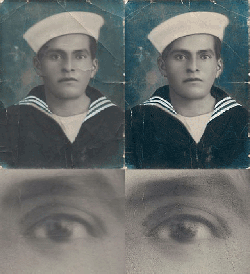
To demonstrate the difference, we have scanned the same photograph using two different types of equipment. Both scans were made at 600 dpi.
The scan on the left was produced using a common all-in-one printer/copier/scanner. The scan on the right was produced using a calibrated professional photo scanner specifically configured for high-quality photographic output.
Although both files technically have the same resolution, the difference in actual image quality is significant. The professional scanner captures substantially finer detail, more accurate tonal information, and better color balance. When the images are enlarged, small details remain considerably clearer, while the scan produced by the common scanner shows noticeably softer and more blurred detail.
In other words, 600 dpi does not necessarily mean 600 dpi of equal quality. The equipment and the way the image is captured matter just as much as the numerical resolution.
CAN YOU RESTORE THE ORIGINAL PHOTOGRAPH INSTEAD OF MAKING A DIGITAL COPY?
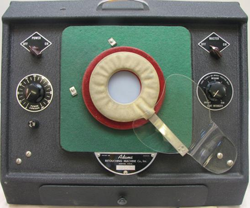 Traditional photographic retouching of an original photograph is sometimes possible, but it is evaluated on a case-by-case basis.
If an original photograph has only minor surface damage, such as a few small scratches or marks, it may be possible to reduce their appearance through the careful application of traditional retouching materials. However, extensive restoration of an original photograph is generally neither practical nor advisable.
One common misconception about historical photo restoration is that restorers of the past routinely repaired severely damaged original photographs directly. In reality, this was rarely the case.
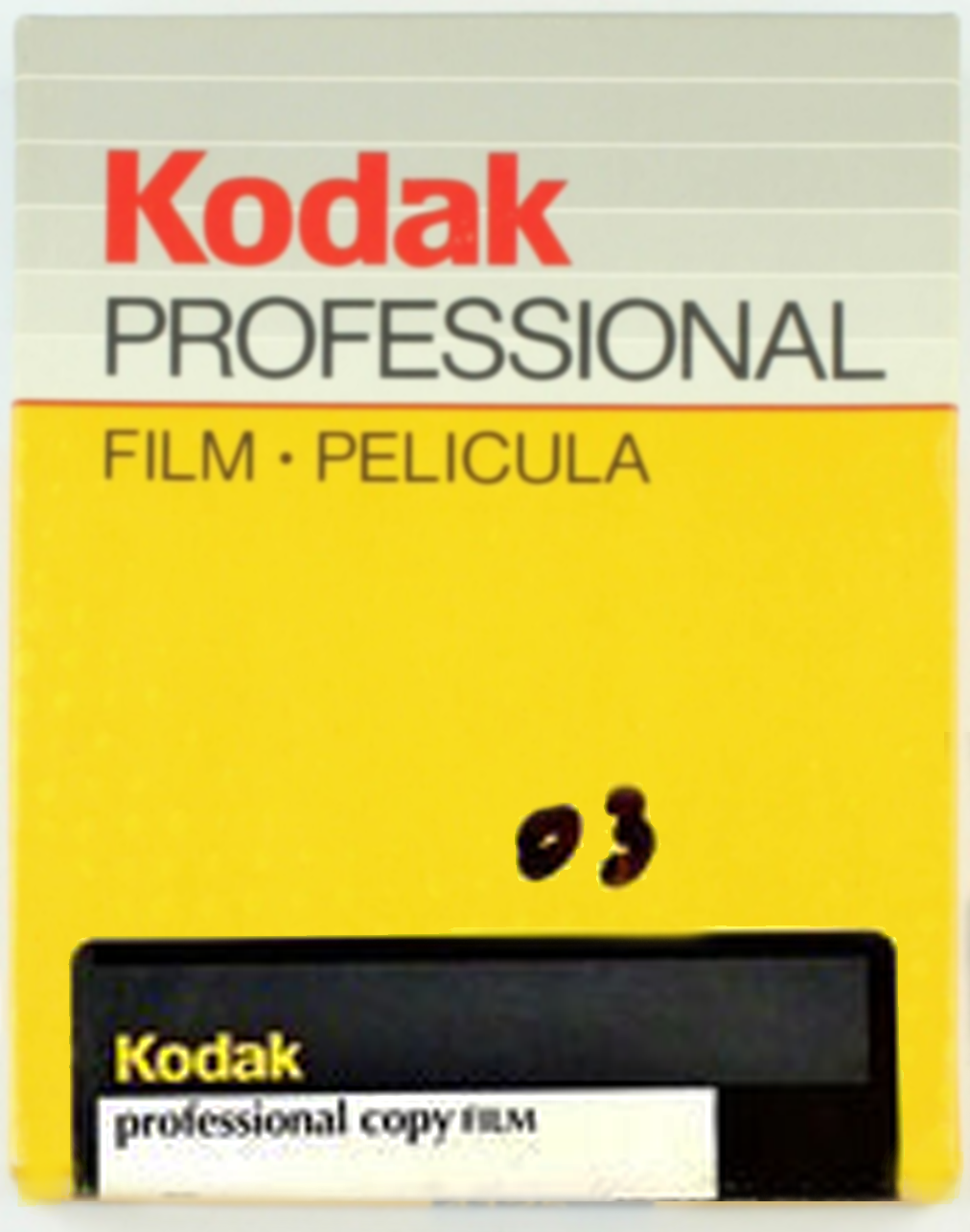
A skilled photographic retoucher could certainly repair minor imperfections, but significant damage usually required the creation of a copy of the original photograph. Historically, the photograph would often be copied onto a special photographic copy film, such as Kodak Professional Copy Film 4125. The resulting negative could then be carefully retouched using specialized pencils, dyes, and other photographic materials. A new photographic print was subsequently made from the retouched negative.
This approach allowed the restorer to work on a reproduction rather than risk permanently altering the original photograph.
 Today, digital technology allows us to follow essentially the same preservation principle while achieving far greater precision and control. Instead of creating a copy negative, we create a high-resolution digital file using professional photographic scanning equipment. The restoration is performed on the digital copy, while the original photograph remains untouched.
Once the restoration is completed, the image can be reproduced on archival fine-art papers using archival pigment inks. This creates a beautiful new print while preserving the original photograph as an important historical or family artifact.
For photographs of particular historical, cultural, or sentimental importance, our philosophy is simple: preserve the original and perform the restoration on a faithful reproduction.
I HAVE A DOCUMENT SIGNED BY ONE OF THE PRESIDENTS OF THE UNITED STATES, BUT THE SIGNATURE HAS FADED.
CAN YOU MAKE THE SIGNATURE VISIBLE AGAIN?
Yes. A high-quality reproduction can often be created in which a faded signature and other important details are carefully restored to a condition that makes them much more visible and legible.
This is particularly useful when dealing with historical documents, letters, certificates, photographs, and other materials in which ink or handwriting has faded over time. Digital restoration can often recover and enhance information that is still present in the photographic image but has become difficult to see with the naked eye.
Most importantly, the original document is not altered.
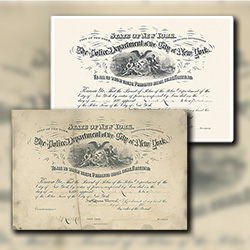 When working with historically or culturally significant material, the original itself should be treated as an artifact. Attempts to darken faded ink, retouch a signature, remove stains, or otherwise improve its appearance directly can permanently alter the evidence contained in the original and potentially diminish its historical value and authenticity.
Instead, a high-resolution digital copy is created and the restoration is performed on that reproduction. The restored image can then be printed while the original remains safely preserved in its existing condition.
Sebastian Wintermute follows the principles outlined in the Conservators Code of Ethics and Guidelines for Practice and does not alter the appearance or physical condition of original photographs or documents of cultural or historical significance.
CAN YOU ENLARGE A SMALL PHOTOGRAPH?
Yes. Most photographs can be enlarged to some degree, although the amount of enlargement possible depends primarily on the quality and condition of the original image.
A small passport- or wallet-size photograph can often be enlarged to approximately 4×6 or 5×7 inches. A photograph originally measuring 4×6 or 5×7 inches can generally be enlarged to 8×10 or 11×14 inches while maintaining very good visual quality.
However, there are limits. If the original photograph is severely damaged, blurry, out of focus, poorly exposed, or contains very little photographic detail, enlarging it substantially cannot create information that was never captured in the original image.
Modern restoration techniques can sometimes improve the appearance of a small photograph by correcting fading, repairing damage, sharpening appropriate details, and carefully reducing distracting imperfections. Nevertheless, restoration cannot truly recreate photographic detail that has been permanently lost.
The greater the enlargement, the more noticeable the grain structure and texture of the original film may become. In some cases, however, this natural photographic grain can actually contribute to the character and authenticity of an enlarged vintage photograph.
IS IT POSSIBLE TO CHANGE A BACKGROUND ON AN OLD PHOTOGRAPH?
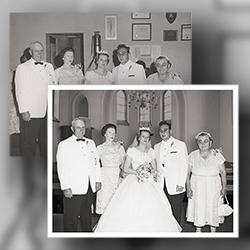
With sufficient skill and careful attention to lighting, perspective, depth, and detail, it is possible to replace a background, remove an unwanted person or object, or make other creative changes without making the photograph appear obviously manipulated.
Depending on the photograph, it may also be possible to adjust lighting, modify colors, reconstruct missing areas, or make carefully considered changes to clothing and other elements within the image.
The goal of a creative restoration is not simply to make an alteration possible, but to make it appearnatural and convincing, while preserving the character and photographic quality of the original image.
However, there is an important distinction between creative photo editing and historical photo restoration.
Photographs and documents of cultural, historical, or documentary significance are never altered in a way that changes their factual content or appearance. Removing a person, changing a background, altering clothing, or otherwise manipulating historical evidence could misrepresent the original photograph and compromise its value as a historical record.
For historically significant photographs, restoration is limited to appropriate preservation work, such as repairing damage, improving legibility, correcting deterioration, and recovering information that remains present in the original image.
HOW DO I PROTECT OLD PHOTOGRAPHS AND DOCUMENTS FROM FADING?
The best way to preserve an old photograph or document is to protect it from the environmental conditions that cause deterioration in the first place.
Whenever possible, store original photographs and documents inarchival, acid-free, lignin-free envelopes, folders, and boxes designed specifically for preservation. These materials are available from many reputable art-supply, archival-supply, and professional framing stores.
Avoid storing photographs and documents in places where temperature and humidity fluctuate significantly. Attics, basements, garages, sheds, and areas near radiators, fireplaces, heating vents, or exterior windows are generally poor storage locations. Excessive heat, moisture, and repeated changes in humidity can accelerate deterioration, encourage mold growth, and cause photographic materials and paper to become brittle or distorted.
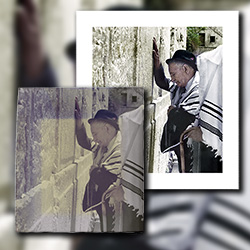 Light is another major source of damage. When displaying an important photograph or document, use UV-protective glass or glazing and avoid placing the framed piece in direct sunlight. Prolonged exposure to sunlight or strong artificial light can cause photographs, inks, and pigments to fade permanently.
If a photograph or document is framed, never use household glass cleaners, ammonia-based products, solvents, or other chemicals directly on the glass. Liquids can seep through the edges of the frame and come into contact with the photograph, paper, mat, or mounting materials.
Instead, use a clean, soft, lint-free cloth or paper towel lightly dampened with water to clean the glass. Do not spray anything directly onto the framed object.
If an old frame or its glass becomes damaged, we recommend taking the entire piece to a professional framer experienced in archival framing. When reframing an important photograph or document, specifically requestarchival-quality, acid-free mounting and matting materials and UV-protective glazing.
A little prevention can make an enormous difference. Protecting an original photograph from light, heat, moisture, and inappropriate materials today may preserve it for generations to come.
HOW LONG DO THE DIGITAL PRINTS LAST?
 Photographs and documents restored by Sebastian Wintermute are printed onarchival fine-art papers using specially formulated archival pigment inks selected for image quality and longevity.
Under appropriate storage and display conditions, these materials can provide a very long useful life, with some archival print systems rated to lastmore than 150 years under controlled conditions. Actual longevity depends on a number of factors, including the paper, inks, framing materials, exposure to light, temperature, humidity, and the environment in which the print is displayed.
For this reason, archival printing is only one part of proper preservation. Even the finest archival print should be protected from excessive light, moisture, heat, and other damaging environmental conditions.
One of the advantages of a digital restoration is that the completed restoration can be preserved as a high-resolution digital master file. If a restored print is ever lost or damaged, another print can be produced from the archived restoration without having to repeat the restoration process.
Upon request, digital copies of the original scan and restored image can also be provided on physical archival media such as a CD or DVD. However, because digital storage media can eventually fail or become obsolete, we recommend maintaining more than one backup and periodically transferring important files to current storage technology.
CAN I MAKE ADDITIONAL PRINTS FROM DIGITAL FILES MYSELF?
Once you have a high-resolution digital file, you can have additional prints made by another printer or print them yourself at home.
However, there can be a considerable difference between an ordinary photographic print and a professionally produced archival fine-art print.
To achieve the highest possible quality and longevity, Sebastian Wintermute uses carefully selected fine-art archival papers and archival pigment inks. Professional printing also allows much greater control over color management, tonal range, sharpness, and the final appearance of the image.
If you choose to print the photograph yourself, an acceptable-quality print with reasonable longevity can certainly be produced using a good-quality home printer and appropriate photographic paper.
For the best results, we recommend following the printer manufacturer's recommendations regarding paper type, ink, print settings, color management, and storage. Keep in mind that the quality of the paper and inks can have as much impact on the longevity of the print as the printer itself.
HOW SAFE IS IT TO MAIL MY PHOTOGRAPH OR DOCUMENTS?
When mailing an irreplaceable original photograph or document, careful packaging and shipping are extremely important. While no shipping method can eliminate all risk, proper preparation can significantly reduce the possibility of damage.
We recommend sending valuable photographs and documents using FedEx or UPS, with tracking and appropriate insurance. For particularly important or irreplaceable items, we also recommend requesting adirect signature upon delivery so that the package is not simply left unattended.
Never place several original photographs or documents together without protection. Whenever possible, place each item in an individual protective envelope or archival sleeve and separate photographs with sturdy, clean pieces of cardboard to prevent bending, folding, or creasing.
The package should be rigid enough to prevent the contents from being bent during handling. Use appropriate protective packing materials and make certain that the photographs or documents cannot move freely inside the package.
Always obtain a shipping receipt and tracking number, and consider purchasing insurance for the full declared value of the item.
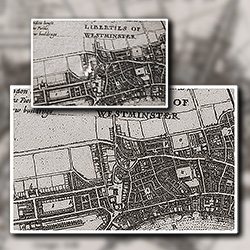 Please do not send framed photographs or documents. Glass can break during transportation and may damage the photograph or document inside the frame.
It is also important to understand that insurance cannot truly compensate for the loss of an irreplaceable original. A family photograph, handwritten letter, historical document, or other unique artifact may have enormous sentimental or historical value that cannot be replaced with money.
For that reason, we take the handling of original photographs and documents very seriously and encourage clients to discuss any concerns about shipping before sending valuable material.
Sebastian Wintermute is not responsible for photographs or documents that are lost or damaged while in transit and reserves the right to decline work or revise an estimate if an item arrives in a condition substantially different from that represented when the estimate was prepared.
DO YOU KEEP DIGITAL COPIES OF PHOTOGRAPHS AND FOR HOW LONG?
Reasonable efforts will be made to return all original materials promptly after completion of the project.
Original materials and digital files will normally be retained for up to 90 days following project completion unless otherwise agreed in writing.
If materials remain unclaimed after reasonable efforts were made to contact the client before the expiration of the applicable retention period, all client's materials may be discarded or otherwise disposed of.
Do you offer film processing and scanning services?
Preserve Your Past DOES NOT sell or develop 35mm color or BW film.
For disposable cameras, 120mm and 35mm film sales, film processing, and 35mm film scanning, please visit:
LUSTER PHOTO
121 Avenue ANew York, NY 10009
(212) 979 - 1669
www.lusterphoto.com
To schedule a consultation please e-mail the following:
- Client's name and contact information
- Scans or clear snapshots of the items to be restored
(Please e-mail all images in JPG or TIFF formats, resolution 300dpi) - Brief descriptions of the items including sizes, colors, and materials
- Any requests and suggestions concerning restoration treatment
Please contact
restoration@preserveyourpast.org
with any questions you may have or if you require additional information.
|
|||||||||
| © 2026 Preserve Your Past | |||||||||
| By accessing this website you signify that you read, understood, and agreed to be bound by Terms of Services. If you do not agree to these terms, you are not permitted to use the Services. These Terms of Services have the same force and effect as an agreement in writing. |
|||||||||


