RESTORATION, PRESERVATION & ARCHIVING
MENU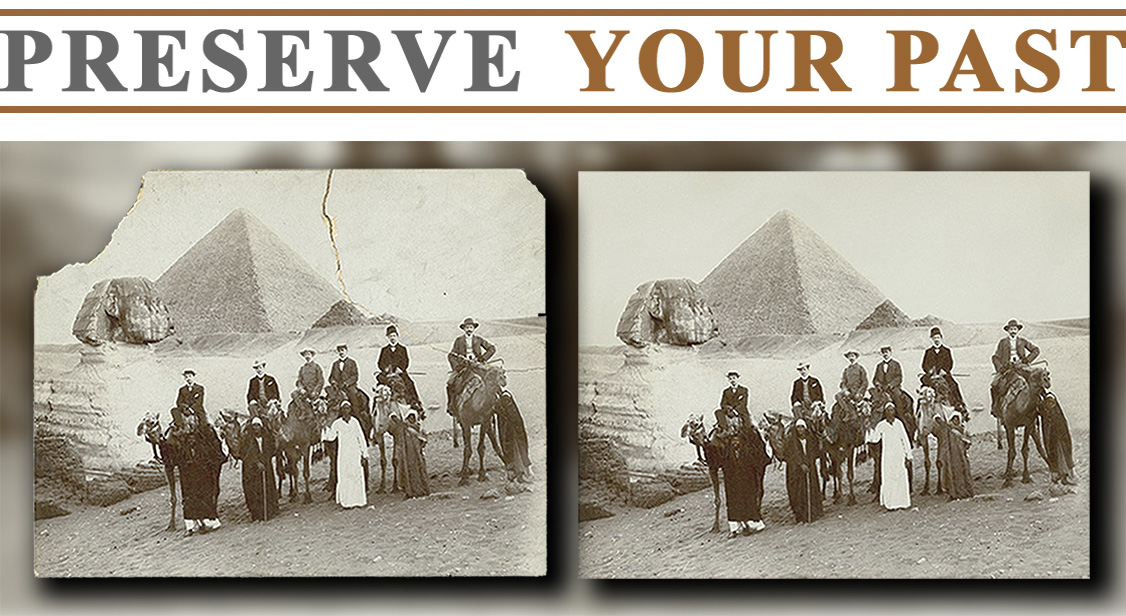
Restoration of a 19th-Century Photograph of American Tourists in Egypt
The 19th century marked the birth of organized leisure travel. Improvements in steamship and railway transportation, combined with the emergence of professionally guided package tours, made international travel safer, more affordable, and accessible to an expanding middle class. Thousands of Americans eagerly embraced the opportunity to explore distant lands in the company of fellow travelers under the guidance of experienced tour leaders.
For most tourists, Europe remained the destination of choice, offering firsthand encounters with the great architecture, art, and cultural treasures of France, Italy, Greece, and other historic nations. Others were drawn farther east by religious devotion and a fascination with the ancient world. They journeyed through the biblical landscapes of the Holy Land and Egypt, retracing the paths of kings, prophets, and pharaohs while witnessing some of history's most celebrated monuments with their own eyes.
Long before Instagram, Facebook, or digital cameras transformed the way we document our travels, photography had already begun to revolutionize the travel experience. Rather than returning home with only stories of distant adventures, Victorian-era tourists could share tangible visual records of the remarkable places they had visited. Photographs became treasured keepsakes, allowing family and friends to glimpse the wonders of foreign lands that few would ever have the opportunity to see themselves.
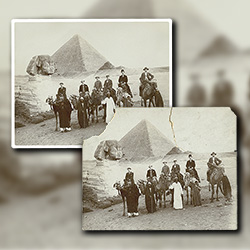
This remarkable photograph could easily have illustrated Mark Twain's classic 1869 travel memoir, The Innocents Abroad, or The New Pilgrims' Progress. It captures a group of American tourists proudly posing atop camels on the Giza Plateau, with the Great Sphinx and the Great Pyramid rising majestically behind them. Like countless travelers of the era, they sought not only adventure but also the prestige of standing before one of the world's oldest and most awe-inspiring civilizations.
The original photograph had suffered from age-related wear, including scratches, abrasions, stains, and surface damage. It was meticulously restored through careful digital retouching that repaired these imperfections while preserving the authentic character of the historic print. Special attention was given to maintaining the photograph's distinctive warm bluish tonal qualities, typical of many late-19th-century photographic prints, ensuring that the restor
|
|
|
|

|
|
|
|
|
|
|
|
|
|
|
|
|
|
|
|
|
|
|
|
|
|
|
|
|
|

|
|
|
|
|
|
|
|
|
|
|
|
|
|
|
|
|||||||||
| © 2026 Preserve Your Past | |||||||||
| By accessing this website you signify that you read, understood, and agreed to be bound by Terms of Services. If you do not agree to these terms, you are not permitted to use the Services. These Terms of Services have the same force and effect as an agreement in writing. |
|||||||||


