RESTORATION, PRESERVATION & ARCHIVING
MENU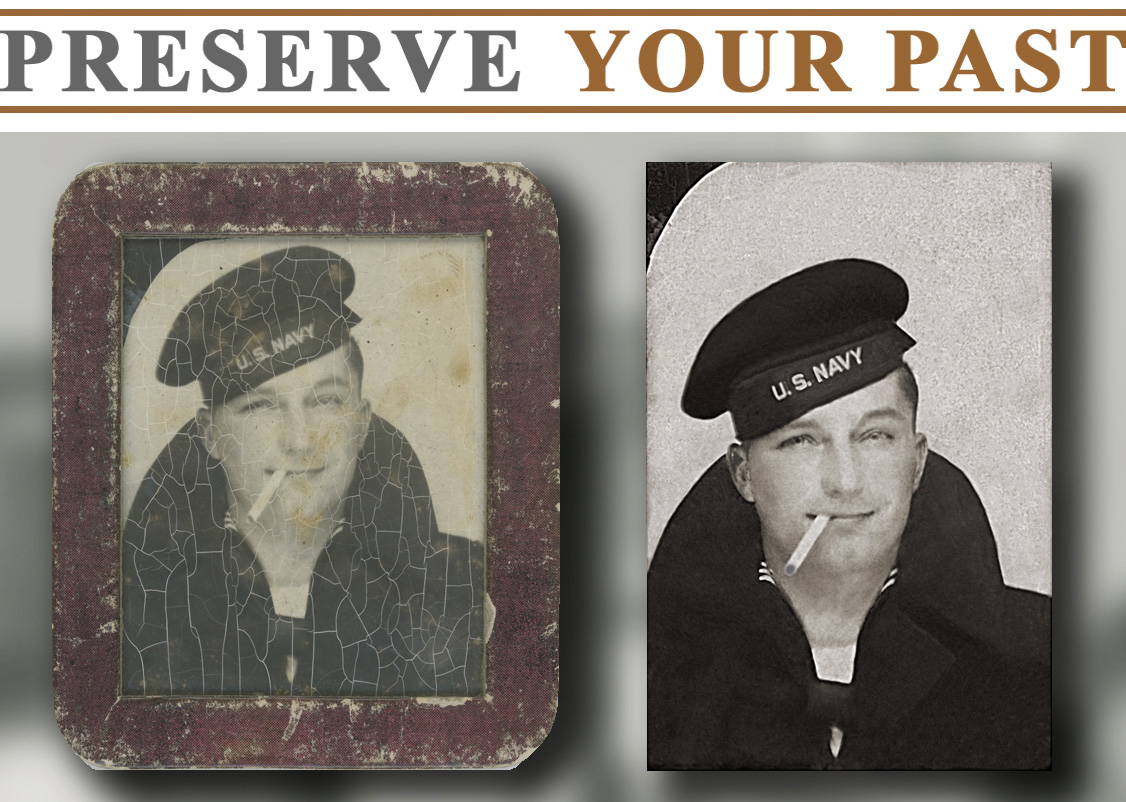
Restoring a WWII US Navy Sailor’s Wallet-Size Portrait
Really excited about this photo restoration by Sebastian Wintermute!
- Hanna C.
My Papa's badass Navy portrait was brought back to life
Every photograph tells a story, not only through the people and places it depicts, but also through the passage of time recorded in the photograph itself. Scratches, stains, fading, tears, cracks, discoloration, and other forms of deterioration become part of the physical history of a cherished image. Professional photo restoration is not about erasing that history. It is about preserving the photograph while carefully repairing the damage that prevents the original image from being fully appreciated.
A thoughtful restoration respects the authenticity of the original photograph while addressing the damage that distracts from its historical and visual integrity. Tears, stains, scratches, fading, and damaged photographic emulsion can often be carefully repaired, but the natural character that develops over decades should be preserved whenever possible. The subtle texture of the photographic paper, the gentle patina of age, variations in tone, and even certain imperfections unique to the original print can all be part of the photograph's identity. These qualities should not automatically be sacrificed in pursuit of an artificially perfect image.
Over-restoration can unintentionally remove the very details that make a historic photograph genuine. Excessive digital manipulation may replace the character of an original vintage print with a polished, modern appearance that never existed in the first place. The goal of restoration is not to create a new image, but to faithfully reveal and preserve the image that has always existed beneath years of damage and deterioration.
This principle is particularly important when restoring photographs connected to personal and historical memories. A portrait of a serviceman from the World War II era is more than simply a picture of a person. It may be one of the few surviving visual records of a family member at a particular moment in his life, a young man in uniform, photographed during a period that profoundly shaped both his own life and the history of an entire generation.
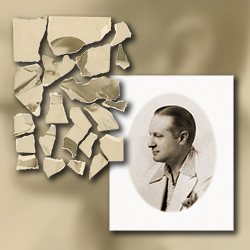
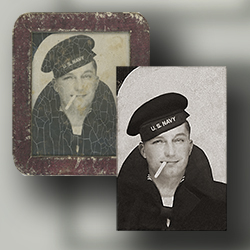
This wallet-size photograph of a US Navy sailor, taken during his World War II service, had developed cracks and deterioration in the photographic emulsion over the years. The portrait was carefully retouched to repair the damaged areas and restore the sailor's face without losing the qualities that gave the original photograph its character.
Particular attention was given to preserving his expressive features, especially his smile and the slightly cheeky, lively look in his eyes. These small details are what bring a portrait to life and can often be among the most important elements to preserve during a restoration. Rather than reconstructing the face into an artificially flawless version, the restoration focused on recovering the personality already present in the original photograph.
At the same time, some of the photograph's age-related characteristics were intentionally left intact. The original texture, subtle discoloration, and the rough-cut corner of the print were preserved to maintain its authentic vintage appearance. These imperfections are not simply flaws to be eliminated; they are physical evidence of the photograph's journey through time.
The finished restoration strikes a balance between repair and preservation. The damage that distracted from the sailor's portrait has been carefully addressed, while the qualities that tell us this is an original vintage photograph have been retained.
The objective was never to make the photograph look new. It was to restore the personality and warmth of the original portrait while preserving the marks of time that make this particular photograph unique. In the end, the photograph remains what it always was: a small but deeply meaningful portrait of a young US Navy sailor from the World War II era, preserved for his family and for future generations to see and remember the story that has survived.
In recognition of their sacrifice, service, and suffering, Sebastian Wintermute offers free photo restoration and digital archiving services to:
- WWII Combat Veterans of the Allied Forces
- Holocaust Survivors
- Victims of 9/11 and other terrorist atrocities
as well as their immediate families and direct descendants
|
|
|
|
|
|
|
|
|
|
|
|
|
|
|
|
|
|
|
|
|
|
|
|
|
|
|
|
|
|
|
|
|
|
|
|
|
|
|
|
|
|
|
|
|
|
|||||||||
| © 2026 Preserve Your Past | |||||||||
| By accessing this website you signify that you read, understood, and agreed to be bound by Terms of Services. If you do not agree to these terms, you are not permitted to use the Services. These Terms of Services have the same force and effect as an agreement in writing. |
|||||||||


