RESTORATION, PRESERVATION & ARCHIVING
MENU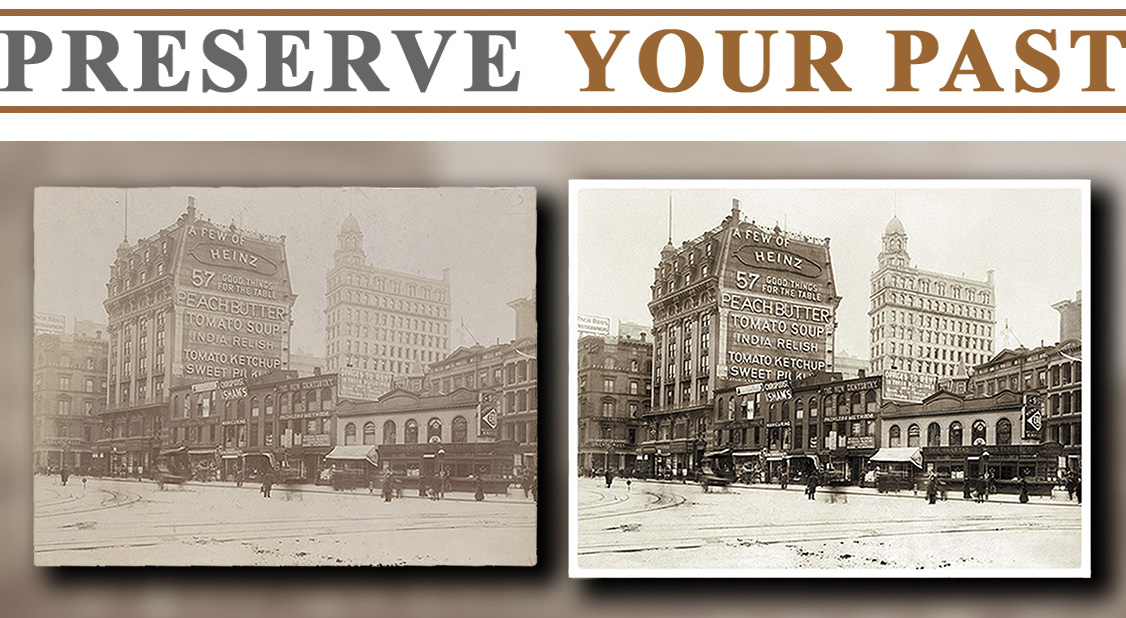
RESTORATION OF A HISTORIC PHOTOGRAPH OF MANHATTAN
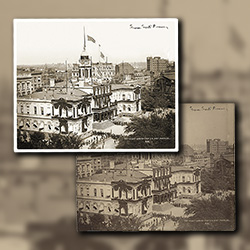
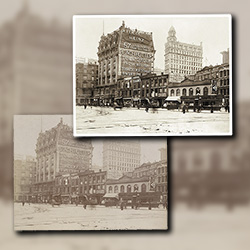
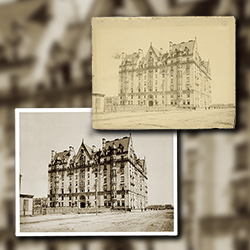
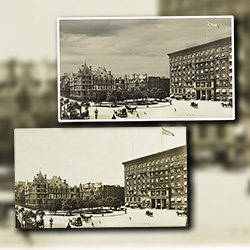
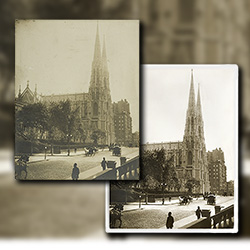
Before the iconic Flatiron Building was completed in 1902, visitors standing in Madison Square enjoyed a very different view of the famous intersection of Fifth Avenue, Broadway, and 23rd Street. This remarkable historic photograph captures the neighborhood during the late nineteenth century, before the skyline was transformed by one of New York City's most recognizable landmarks and the wave of early skyscraper construction that followed.
Long before the Flatiron Building altered the airflow around the intersection, Madison Square was already well known for its powerful and unpredictable wind gusts. The convergence of Broadway and Fifth Avenue created strong air currents that frequently caught pedestrians by surprise. According to popular accounts of the era, groups of men gathered along 23rd Street hoping the wind would lift the long skirts of passing women, briefly revealing their ankles and lower legs, an uncommon sight in Victorian society. Police officers regularly dispersed these crowds, reportedly telling the men to "skidoo," a slang expression meaning to leave immediately. This colorful local tradition is widely believed to have contributed to the enduring phrase "23 skidoo", although historians continue to debate its exact origin.
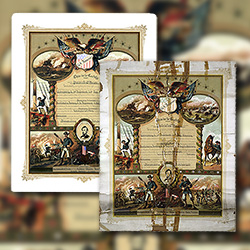
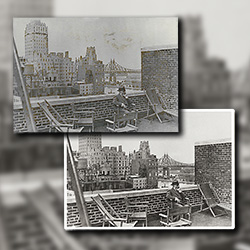
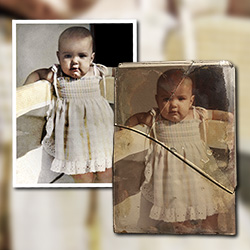
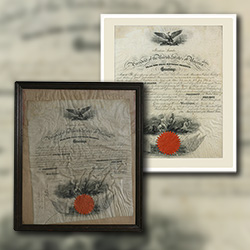
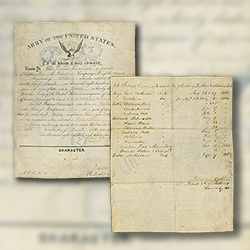
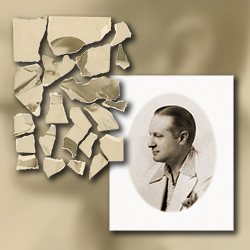
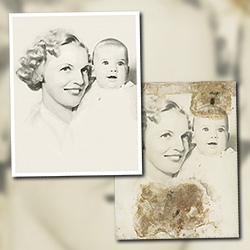
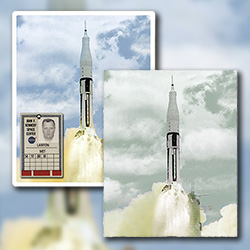
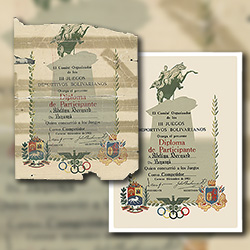
This historic Manhattan photograph was professionally digitized at the request of a New York organization dedicated to preserving the city's rich architectural heritage. The original print was scanned at exceptionally high optical resolution to capture every available detail before undergoing meticulous digital restoration. Surface blemishes, scratches, stains, and other signs of age were carefully retouched while preserving the photograph's historical authenticity. Subtle tonal and color corrections restored the depth and richness that had faded over decades, resulting in a faithful digital master. A museum-quality archival fine art print was then produced from the high-resolution restoration, ensuring that this important visual record of New York City's architectural history will be preserved for generations to come.
|
|
|
|

|
|
|
|
|
|
|
|
|
|
|
|
|
|
|
|
|
|
|
|
|
|
|
|
|
|
|
|
|
|
|
|
|
|
|
|
|
|
|
|
|
|
|||||||||
| © 2026 Preserve Your Past | |||||||||
| By accessing this website you signify that you read, understood, and agreed to be bound by Terms of Services. If you do not agree to these terms, you are not permitted to use the Services. These Terms of Services have the same force and effect as an agreement in writing. |
|||||||||


