RESTORATION, PRESERVATION & ARCHIVING
MENU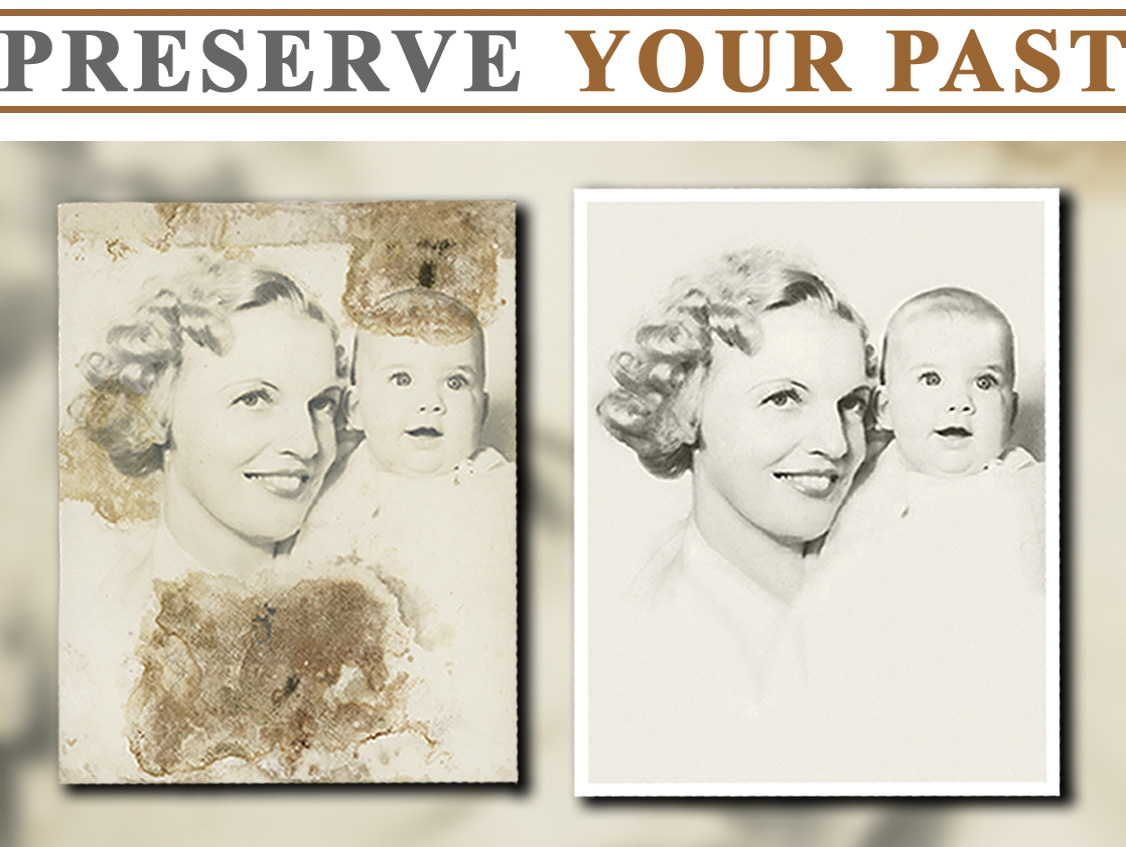
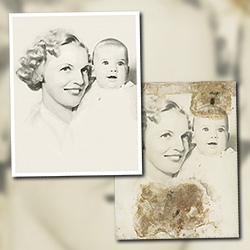
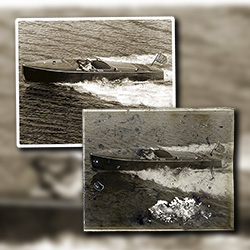
Restoration of a Water-Damaged and Stained PhotograpH
A heavy rainstorm, a burst pipe, a leaking sewer line, a failing water heater, or a broken washing machine, regardless of the cause, a flooded basement can be a nightmare for any homeowner. When contaminated water mixes with dirt, chemicals, fuel, motor oil, or sewage, the situation can become even more serious, potentially making a home unsafe and requiring extensive and costly repairs.
In the aftermath of a flood, professional water damage recovery crews are often called upon to pump out standing water and repair damaged walls, floors, plumbing, and electrical systems. Yet these professionals are not always equipped to deal with the personal treasures that may have been damaged in the disaster. Among the most vulnerable, and often the most irreplaceable, are family photographs, albums, letters, books, and other records of a family's history.
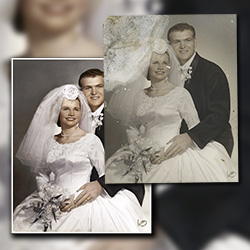 Water damage can destroy more than a home. Photographs are far more than pieces of paper. They are visual records of individual lives and entire families. A single photograph may preserve the face of a grandparent as a young person, the moment a couple exchanged wedding vows, a child's first years, a family gathering, or a portrait of someone who has long since passed away.
Few experiences are more heartbreaking than discovering treasured photographs scattered among flood debris, covered with mud and stains, and seemingly destined for the trash. For many families, these photographs are the only surviving visual connection to earlier generations. Once an original photograph is lost, the information contained within it, including the faces, clothing, surroundings, and relationships it documents, may be impossible to replace.
Preserving photographs damaged by flooding often requires the assistance of an experienced photo restoration and preservation specialist. Water-damaged photographs can be extremely fragile, and attempts to clean or separate them without understanding the photographic process and the condition of the materials can sometimes cause additional damage.
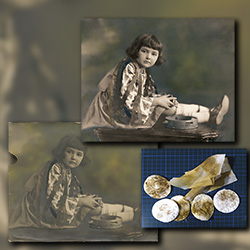
Depending on the condition of the photograph, professional treatment may include careful surface cleaning, the removal of dirt and debris, mold and mildew treatment, stain reduction, flattening, controlled drying, and high-resolution digital scanning. The goal is not simply to make a damaged photograph look better. Proper restoration begins with stabilizing and preserving what remains of the original image while documenting as much of its visual information as possible.
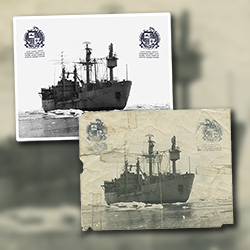
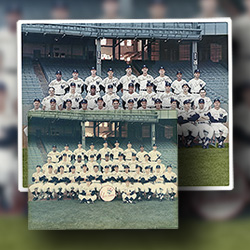
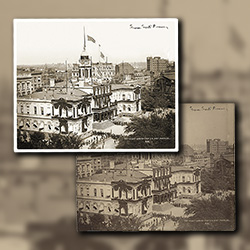
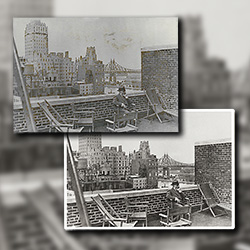
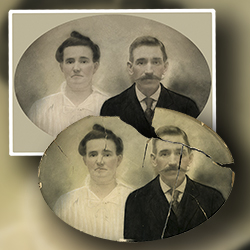
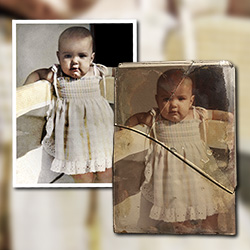
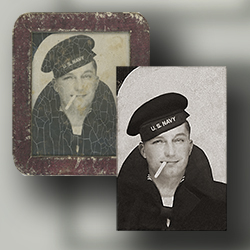
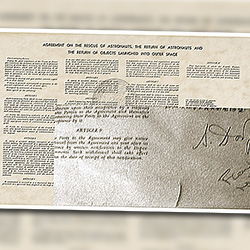
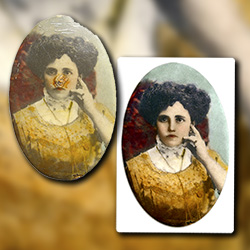
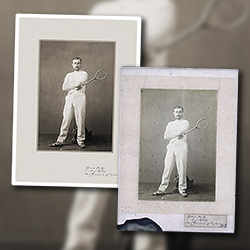
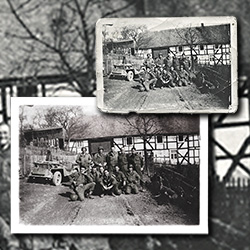
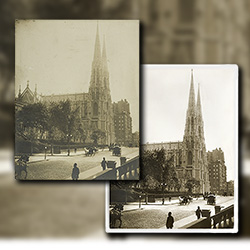
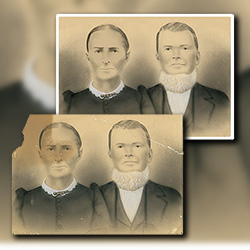
In some cases, a photograph may be severely stained or discolored, with areas of the image obscured by water marks, mold, or other contaminants. Portions of the photographic emulsion may also have been scratched, damaged, or lost. Even when the physical photograph cannot be returned completely to its original condition, high-resolution digital restoration may make it possible to recover much of the image's visual information.
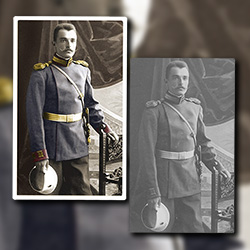
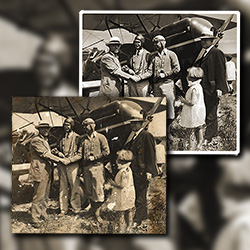
Once a damaged photograph has been carefully scanned at high resolution, digital restoration techniques can be used to address many of the problems caused by water and staining.
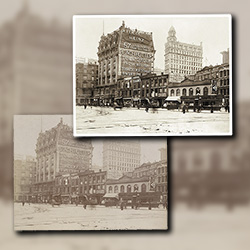
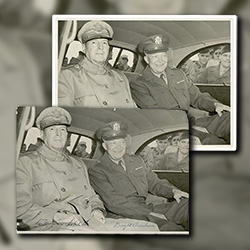
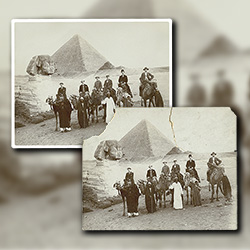
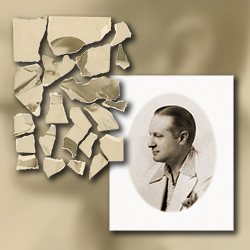
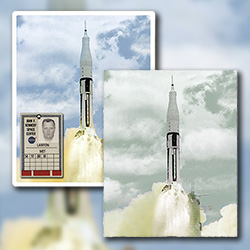
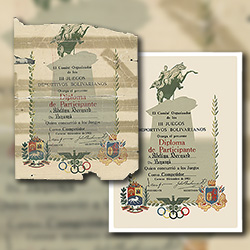
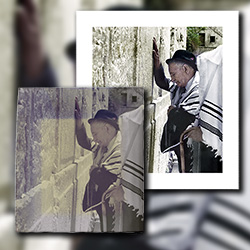
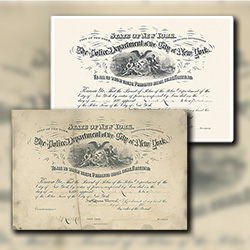
Digital retouching can reduce or remove distracting stains, discoloration, scratches, and surface marks. Missing or damaged areas can sometimes be reconstructed by carefully analyzing the surviving portions of the photograph and using surrounding visual information as a guide. Tonal balance, contrast, and overall clarity can also be adjusted to help reveal details that may have become difficult to see. The process requires patience and considerable attention to detail. A successful restoration should respect the character and historical integrity of the original photograph rather than making it appear artificially new.
In cases where significant portions of an image have been lost, restoration becomes part conservation and part visual reconstruction. Every decision must be made carefully, particularly when restoring photographs that document important people, places, or family events. The objective is to create a restored image that feels authentic to the original while preserving the photograph's historical and sentimental significance.
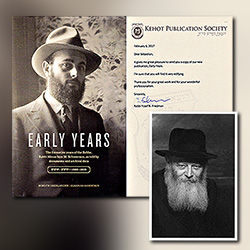
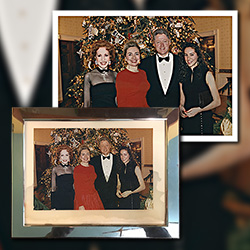 Digital restoration provides an important additional layer of protection for photographs that have already suffered damage. Once a photograph has been professionally scanned and restored, a high-quality digital master can be archived and preserved separately from the original physical photograph. Copies can then be created for family members without repeatedly handling the fragile original. Restored images can be printed for display, incorporated into new family albums, reproduced for anniversaries and other special occasions, or shared digitally with relatives living far away. A carefully preserved digital file can also serve as a valuable backup should the original photograph suffer additional damage in the future.
Whenever possible, however, the original photograph should still be retained and preserved. Even a damaged original may contain physical and historical information that cannot be fully captured by a digital reproduction. The restored digital image and the original photograph therefore serve different but complementary purposes.
A water-damaged photograph may initially appear beyond hope. Stains, mold, discoloration, tears, and other signs of deterioration can make an image look as though its story has been permanently erased. But damage does not always mean the end of the photograph. With careful professional treatment and advanced digital restoration, it is often possible to recover and preserve significant visual information from photographs that have suffered serious water damage. The process can transform a damaged and seemingly lost image into a meaningful family heirloom once again.
A restored photograph is more than a recovered image. It is the preservation of a family's story. It allows future generations to see the faces of those who came before them, to recognize family resemblances, to understand where they came from, and to connect with people whose lives existed long before their own.
For families who have experienced a flood, fire, or other disaster, the recovery of a single photograph can therefore carry extraordinary emotional significance. What may appear to be an old, stained piece of paper can represent an entire chapter of family history. Through professional photo preservation and restoration, these fragile fragments of the past can be given a new life. Instead of being discarded with the debris left behind by a flood, they can continue to inspire, educate, and bring comfort, allowing the memories they contain to remain part of the family story for generations to come.
|
|
|
|

|

|
|
|
|
|
|
|
|
|

|
|
|
|
|
|
|
|
|
|
|
|
|
|
|
|
|
|
|
|
|
|
|
|
|
|
|
|
|
|

|
|
|||||||||
| © 2026 Preserve Your Past | |||||||||
| By accessing this website you signify that you read, understood, and agreed to be bound by Terms of Services. If you do not agree to these terms, you are not permitted to use the Services. These Terms of Services have the same force and effect as an agreement in writing. |
|||||||||


