RESTORATION, PRESERVATION & ARCHIVING
MENU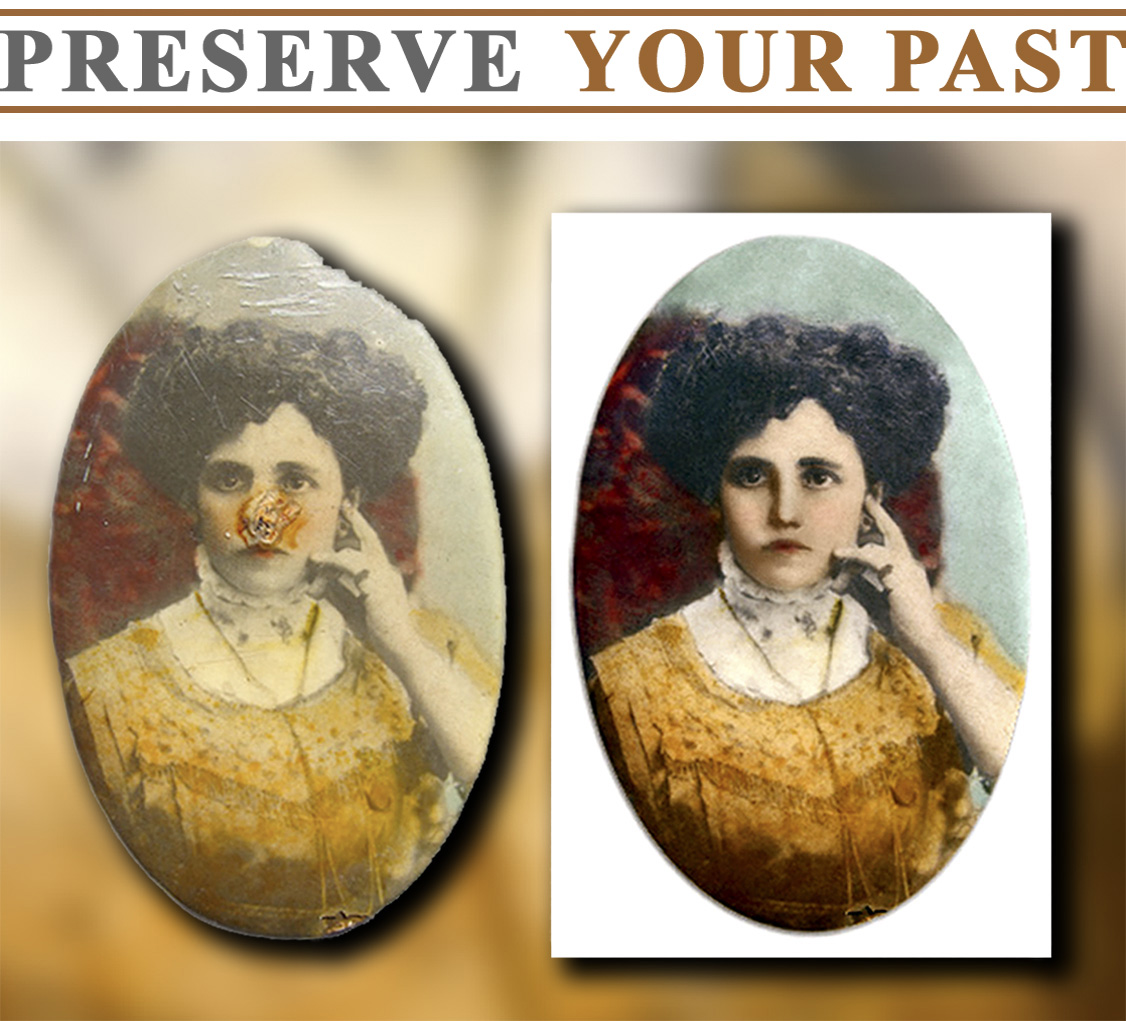
RESTORATION OF A PHOTOGRAPH FOR THE DOCUMENTARY FILMTRIANGLE: REMEMBERING THE FIRE
On March 25, 1911, the Triangle Shirtwaist Factory fire became one of the deadliest industrial disasters in New York City and one of the most devastating workplace tragedies in United States history. Among the 146 victims was Josephine Carlisi, a 31-year-old garment worker whose life was cut short in the disaster that forever changed workplace safety laws in America.
Josephine Carlisi was employed at the Triangle Waist Company, located on the top three floors of the Asch Building at 23–29 Washington Place in the Greenwich Village neighborhood of Manhattan. Based on the documented injuries recorded after the fire and the circumstances surrounding the deaths of many victims, Josephine was likely among those who, trapped by the flames and unable to reach an exit, jumped from the upper floors of the building in an attempt to escape. Her body was reportedly identified by her brother, Vincent Buscemi.
She was listed as Case No. 6 in the January 15, 1913 Report of the Joint Relief Committee, which documented assistance provided to the families of those killed in the tragedy:
“J.C., 35 years old, dead, union member, earned $12.00 a week. Leaves husband, arm slightly injured, and three children all under school age.”
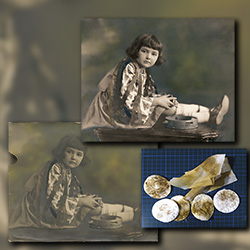
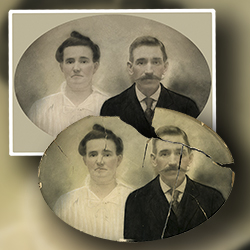
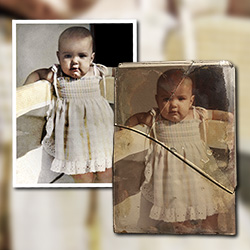
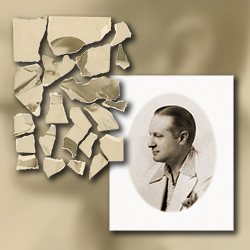
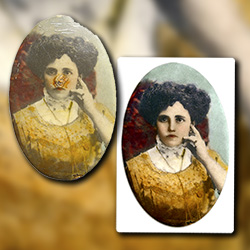
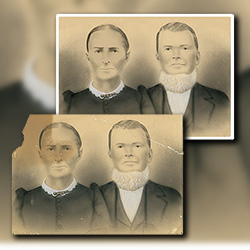
For many years, no known photograph of Josephine Carlisi was believed to exist. After extensive historical research, however, a small damaged photographic medallion was discovered, authenticated, and dated. The fragile image had suffered significant deterioration over time, requiring extensive digital restoration before it could be used in the HBO documentary film Triangle: Remembering the Fire, produced to commemorate the 100th anniversary of the tragedy.
The restoration process focused on preserving the authenticity and historical character of the original image while carefully recovering lost details. Through meticulous reconstruction of facial features, tonal correction, and removal of damage caused by age and deterioration, the photograph revealed the likeness of a young woman whose life was tragically lost more than a century earlier.
The restored portrait helped bring a personal identity back to one of the many immigrant women whose stories were overshadowed by the scale of the disaster. Beyond preserving an important historical photograph, the restoration served as a visual memorial to Josephine Carlisi and the 145 other workers who perished in the Triangle Shirtwaist Factory fire.
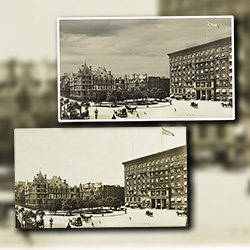
The Triangle Shirtwaist Factory occupied the eighth, ninth, and tenth floors of the Asch Building, a landmark structure located near Washington Square Park in Greenwich Village. The factory employed hundreds of workers, primarily young immigrant women from Italy and Eastern Europe, who produced fashionable women's blouses known as shirtwaists.
At the beginning of the 20th century, factory safety regulations were limited, and many industrial workplaces prioritized production over worker protection. The Triangle factory contained numerous hazardous conditions: combustible fabrics were stored throughout the workspaces, tissue paper patterns hung above cutting tables, and piles of cotton and fabric scraps accumulated on the floors. Narrow aisles, crowded sewing stations, and inadequate exits made evacuation extremely difficult.
 On the afternoon of March 25, 1911, a fire began in a scrap bin beneath a cutting table on the eighth floor. Flames quickly spread through the highly flammable materials, including paper patterns suspended throughout the room. Within minutes, the fire engulfed the upper floors of the building.
Workers found themselves trapped by locked exit doors, overcrowded stairways, and inadequate fire escapes. The building had only limited emergency exits, and many workers were unable to reach safety. Some died from smoke inhalation and burns, while others jumped from the windows of the upper floors to escape the rapidly advancing flames.
Although the New York City Fire Department responded quickly, the equipment of the era was unable to reach the upper floors. Fire ladders extended only to approximately the sixth floor, leaving workers above that level beyond rescue.
When the fire was finally extinguished, 141 people had died, and several more victims later succumbed to their injuries, bringing the final death toll to 146.
The aftermath of the Triangle Shirtwaist Factory fire sparked widespread public outrage and became a catalyst for sweeping reforms in workplace safety. Factory owners Isaac Harris and Max Blanck faced criminal charges of manslaughter, although they were ultimately acquitted. Civil lawsuits and public pressure continued, leading to major changes in labor protections.
The tragedy helped inspire a new era of workplace safety legislation, including stricter building codes, mandatory fire inspections, improved emergency exits, fire drills, sprinkler requirements, and enhanced fire prevention measures. The disaster also strengthened the labor movement and contributed to the growth of organizations such as the International Ladies' Garment Workers' Union (ILGWU) , which advocated for improved conditions and protections for garment workers.
Today, the Triangle Shirtwaist Factory fire remains one of the defining moments in American labor history. Preserving photographs like Josephine Carlisi’s restored portrait ensures that the victims are remembered not only as names in historical records, but as individuals with lives, families, and stories of their own.
|
|
|
|

|
|
|
|
|
|
|
|
|
|
|
|
|
|
|
|
|
|
|
|
|
|
|
|
|
|
|
|
|

|
|
|
|
|
|
|
|
|
|
|
|
|
|||||||||
| © 2026 Preserve Your Past | |||||||||
| By accessing this website you signify that you read, understood, and agreed to be bound by Terms of Services. If you do not agree to these terms, you are not permitted to use the Services. These Terms of Services have the same force and effect as an agreement in writing. |
|||||||||


